
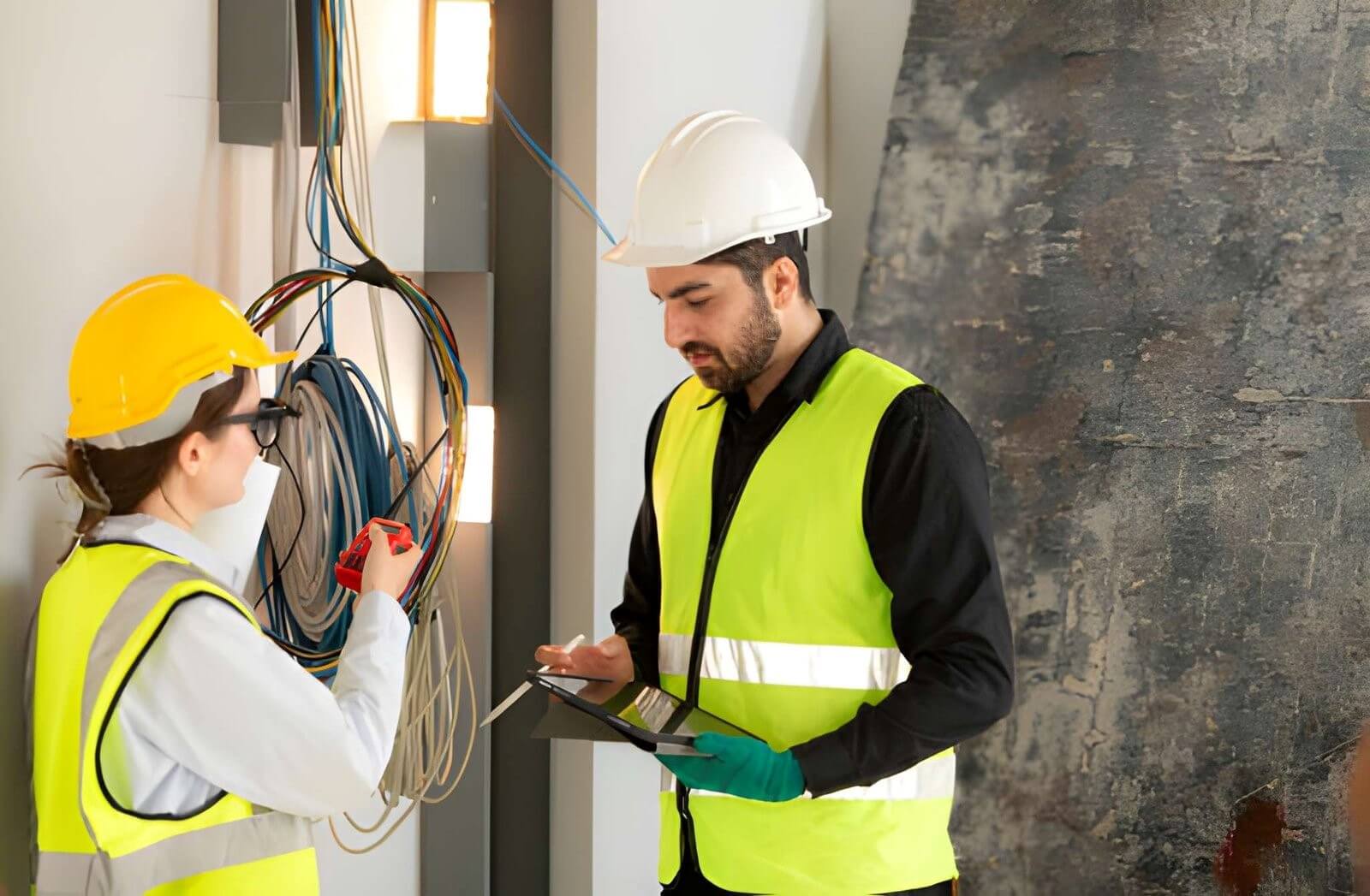
Dual-licensed teams hold both C10 Electrical and B General Building state licenses to handle wall changes and main power setups under one contract. This combined approach simplifies city permits, removes work delays between different teams, and gives building owners one single company responsible for commercial updates across Southern California.
Streamlining Construction with Dual-Licensed Teams
Managing separate teams for wall changes and main electrical wiring often creates poor communication, project delays, and unexpected extra costs. Hiring a company certified as both an electrical contractor and general contractor creates a simple workflow. Framing, drywall, wall openings, and main power hooks all happen in the correct order without extra waiting time.
When commercial buildings expand or update, old working methods require multiple leaders to set schedules. A single dedicated team managing both the physical building structure and the electrical wiring removes wasteful downtime. It also lowers extra management fees from using too many separate companies.
| Operational Area | Traditional Multi-Subcontractor Model | O’Donnell Electric Dual-Licensed Model |
| Project Management | Separate contacts for electrical and general workers | One dedicated project manager for all building and power work |
| Timeline Speed | Frequent downtime waiting between trade handoffs | Matched framing, wiring, drywall, and panel hookups |
| Extra Paperwork Costs | Double management fees and separate contracts | Single contract structure with clear, straightforward costs |
| Code Inspections | High risk of failed building or electrical code checks | Pre-aligned work paths that pass local city inspections easily |
| Who Is Responsible | Blame shared between different companies | 100% single-source responsibility for every project step |
O’Donnell Electric brings over two decades of practical experience to commercial projects across Southern California, including Orange County, Riverside, San Bernardino, Los Angeles, and San Diego counties. As an ISNetworld Certified contractor holding dual C10 and B state licenses, the firm ensures all wall changes and wiring work meet local city codes and national safety rules without stressful paperwork problems.
The Financial Impact of Trade Coordination
Poor scheduling between different workers causes huge extra costs in building remodels. When a general contractor builds a wall without talking to the electrical team about wire paths, workers often have to cut the new wall open, fix the wires, and repair the drywall again.
A dual-licensed firm avoids these expensive redo steps. The same management team plans the wall positions while planning the wiring paths. This makes sure every box, metal pipe run, and power panel fits correctly the very first time.
By keeping structural building work and main electrical hookups under one contract, property owners save money on double management fees. Having one point of contact keeps project budgets clear and stops workers from blaming each other if unexpected issues pop up during construction.
Proactive Maintenance and Commercial Safety Protocols
Regular care for your electrical systems prevents sudden building blackouts and expensive equipment damage. Large power panels and machinery usually show small heat increases long before a breaker trips or a machine stops working completely.
Using thermal camera scans during regular checkups allows trained workers to spot loose wire connections, uneven power loads, and hot circuits while the building stays turned on. Setting up yearly thermal scans helps building managers follow NFPA 70B safety guidelines while making their electrical gear last much longer.
Infrared camera scans check main breaker panels, transformers, and switchboards under normal daily use to find hidden hot spots early. Screw and bolt tightening procedures ensure that electrical wire connections match manufacturer tightness rules using correct testing tools. Wire insulation tests check motor wires and heavy power lines with specialized meters to stop electrical shorts before they start. Safety grounding checks inspect ground wires, metal bonds, and surge protector units to keep people and gear safe from electrical spikes. Power load balancing measures electrical current across all incoming wire legs to make sure the building power draws evenly. By sticking to a simple regular maintenance schedule, commercial buildings lower the risk of dangerous electrical sparks, fires, and unannounced work shutdowns.
Modernizing Facility Power and Energy Efficiency
Growing business operations, new automated machines, and California Title 24 energy rules mean buildings need modern electrical setups. Upgrading power systems requires careful power load math along with basic building alterations.
Upgrading low-voltage control wires, factory gear, or main panel capacity requires basic wood or metal framing, floor trenching, or wall repairs. Working with skilled electrical contractors in Orange County and surrounding areas keeps both electrical design and physical construction moving on one clear timeline.
Modern business buildings must follow strict energy management laws. California Title 24 rules require automatic lights that turn off when rooms are empty, sensors that use natural daylight, and systems that lower power use during hot afternoon hours. Putting these smart systems into older buildings takes more than just running new wires; it requires clean physical installation work. A dual-licensed team plans main power box updates alongside wall repairs and ceiling tile changes, satisfying both state energy laws and building design goals.
Solving Commercial Infrastructure Challenges
Building managers face constant pressure to increase work capacity while avoiding business interruptions. Whether updating a factory for heavy new tools or setting up an office space for more workers, electrical needs directly change physical floor plans.
When facilities install automated conveyor belts, modern CNC machines, and heavy air conditioning units, basic 208V power lines are no longer enough. Moving up to stronger 480V three-phase power requires bigger transformers, stronger main panels, and heavy-duty wire pipes. A dual-licensed contractor coordinates concrete cutting, equipment pad pouring, and utility company meetings required for large power transformers alongside inside panel wiring.
Renting commercial spaces out to new tenants requires fast building turnarounds. Property owners cannot afford lost rent caused by scheduling delays between wall framing crews and electricians. By handling wall framing, dropped ceilings, light setups, and power outlets under one contract, tenant build-outs move from floor plans to final city inspections without trade arguments or lost time.
Partner with O’Donnell Electric
For certified technical skill, thermal diagnostic precision, and complete general contracting management across Southern California, contact the team at O’Donnell Electric.
- Website: odonnell-electric.com
- Direct Office Phone: 866.640.7873
- Emergency Service: 24/7 Rapid Response
- Main Headquarters: 2220 Eastridge Ave, Unit N, Riverside, CA 92507
Frequently Asked Questions
1. What are the benefits of hiring a dual-licensed contractor?
A dual-licensed contractor manages structural alterations and complex electrical work together under one agreement. This structure minimizes communication delays, streamlines local permit processing, lowers project overhead, and ensures unified project delivery without trade conflicts.
2. How often do commercial facilities require thermal inspections?
Commercial and industrial buildings should complete infrared thermal scans at least once per year. Annual thermography identifies loose connections, overloaded circuits, and hot spots early, preventing unannounced power disruptions and equipment damage.
3. Can an electrical contractor manage full tenant build-outs?
Yes, provided the company holds dual licensing as a general contractor and an electrical contractor. Dual licensing allows the team to handle structural framing, drywall work, and surface finishes alongside specialized power distribution, lighting systems, and process wiring.
4. What causes electrical panels to overheat in commercial spaces?
Overheating usually results from loose terminal connections, phase current imbalances, worn contact surfaces, or overloaded circuits. Regular infrared thermal scanning identifies elevated heat signatures early so technicians can perform targeted maintenance safely.
5. How does dual licensing simplify local permitting in Southern California?
Dual licensing allows a single contracting firm to submit comprehensive plans for both structural and electrical modifications under one permit application. This reduces processing time with municipal building departments and prevents conflicting inspector corrections.


